
|
|
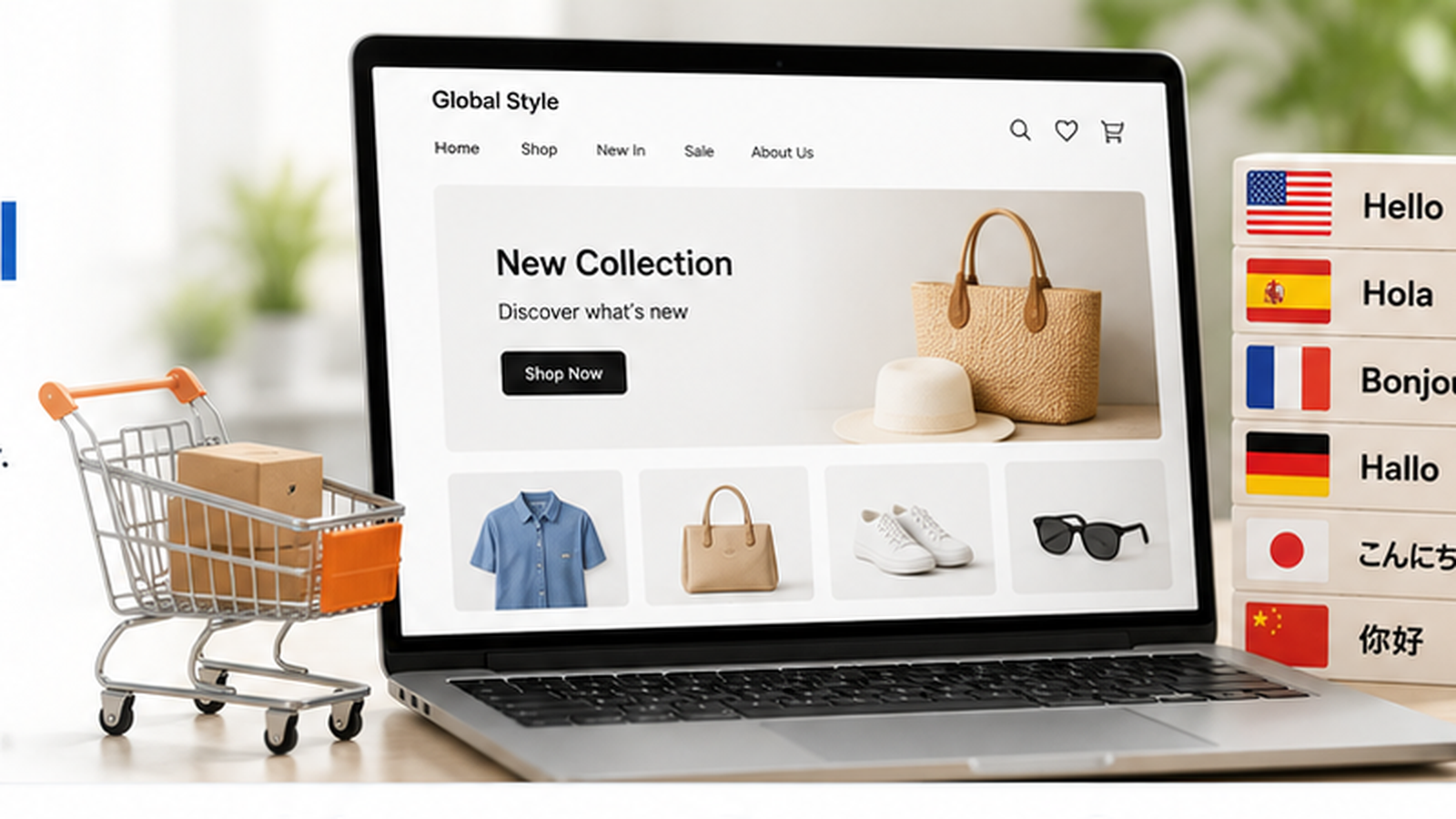
The goal is not simply to create translated pages. It is to give users
in each market a coherent path from discovery to product comparison,
purchase, confirmation and post-sale support.
This guide explains the main content, technical and workflow issues
businesses should review when preparing an online store for multilingual localization.
What Matters Most in E-Commerce Localization?
Complete Store Coverage
Translate the full customer journey, not just products:
navigation, checkout, policies, emails and support content also matter.
Product Terminology
Categories, attributes, specifications, sizes, materials and recurring
product terms should remain consistent across the catalog.
Locale Adaptation
Dates, currencies, measurements, address formats and customer-facing
conventions may need market-specific handling.
Continuous Updates
Stores change frequently, so localization should support new products,
campaigns, price updates and ongoing content revisions.
What Should Be Translated in an Online Store?
E-commerce content appears in many parts of the storefront.
Some text supports discovery and navigation, some explains the product,
and some guides the customer through payment, shipping and after-sales service.
Leaving important interface or transactional content untranslated
can create a fragmented shopping experience even when the product pages
themselves are localized.
Before translation starts, create an inventory of the content sources
that customers can see throughout the purchase journey.
Storefront & Navigation
Menus, categories, breadcrumbs, search, filters and promotional banners.
Product Content
Titles, descriptions, features, specifications, variants and product attributes.
Checkout & Payment
Cart messages, form labels, payment steps, errors and order confirmations.
Customer Support
Help center content, FAQs, contact forms, chat scripts and ticket templates.
Product Translation Needs Structured Terminology
Large catalogs can contain thousands of repeated attributes and recurring
product terms. Consistency becomes difficult if every item is translated independently.
Keep naming patterns consistent across related products and variants.
Use stable category terminology so navigation and filtering remain clear.
Materials, colors, sizes, finishes, technical features and other structured data.
Dimensions, capacities, technical values and product performance information.
Keep option names and combinations consistent across the product family.
Identify product codes and identifiers that should remain unchanged.
Build a Store Glossary Before Scaling the Catalog
E-commerce stores reuse terminology across categories, products,
filters, comparison tables, customer emails and support content.
A glossary can define approved translations for recurring product terms,
category names, materials, features, brand terminology and interface actions.
Style guidance is also useful when product copy should follow a particular
tone, level of formality or brand voice in the target market.
Product Terms
Approve recurring terminology for materials, features and product families.
Brand Terms
Identify trademarks and product names that should remain unchanged.
UI Terms
Keep navigation, checkout and customer-account terminology consistent.
Style Guide
Define tone, punctuation, capitalization and customer-facing language preferences.
|
LOCAL MARKET ADAPTATION
Localization Goes Beyond Translating the Words
|
Currency → Confirm target-market display
Dates → Use the required locale convention
Measurements → Confirm whether conversion is required
Addresses → Match local form structure where needed
Legal / tax rules → Verify separately for each market
|
Translate the Steps That Lead to Purchase
Product pages can be excellent, but a customer may still abandon the
journey if the cart, checkout or payment interface suddenly switches
to another language or uses unclear terminology.
Checkout localization should include field labels, validation messages,
shipping options, payment instructions, confirmation screens and other
customer-facing text around the transaction.
Dynamic content and placeholders should be identified so variables such
as prices, names, quantities and dates remain functional after translation.
Shopping Cart
Quantities, totals, discount messages and cart actions.
Checkout Forms
Customer details, address fields, delivery options and validation errors.
Payment Messages
Instructions, confirmations, failures and payment-status content.
Order Confirmation
Order details, next steps, tracking information and customer notices.
Translate Search-Facing Content as Part of the Store
Multilingual stores also contain content intended for search engines:
page titles, meta descriptions, category copy, product headings,
image alt text and internal links.
A direct translation of a source keyword is not always the phrase
customers use in another market, so SEO localization may require
market-specific keyword research and content adaptation.
URL structure, indexing rules, canonicals and hreflang implementation
are technical SEO decisions and should be coordinated with the website team.
SEO Titles
Write useful, natural page titles for the target language and search intent.
Meta Descriptions
Adapt descriptions for local users rather than translating mechanically.
Category Copy
Localize category introductions and commercial search terminology.
Image Alt Text
Translate descriptive alt text where it supports accessibility and relevance.
Text Inside Images Can Be Part of the Localization Scope
Promotional graphics, size charts, lookbooks, infographics and product
imagery may contain text that is not stored in the website CMS.
These assets should be identified separately so translated text can be
placed back into the design without being missed during the main content export.
Video captions, subtitles and downloadable product documents may also
need localization when they support the shopping experience.
Banners
Campaign headlines, promotional text and calls to action.
Size Charts
Labels, instructions, measurements and customer guidance.
Videos
Captions, subtitles, voice-over scripts and on-screen text where required.
Downloadable Files
Product guides, manuals, catalogs and supporting PDFs.
Formal Store Content Needs Careful Handling
E-commerce stores can include terms of use, privacy notices,
returns information, warranty terms, shipping policies and other
formal customer-facing content.
These pages should be translated consistently with the store while
preserving the meaning and structure of the source.
Translation does not determine whether a policy complies with the law
of a particular market. Legal review should be handled separately where required.
Terms of Use
Translate the source terms faithfully and preserve document structure.
Privacy Information
Keep terminology consistent across privacy and account-related content.
Returns & Warranty
Make customer procedures and conditions clear in the target language.
Shipping Policies
Translate service information, limitations and customer instructions accurately.
Localization Continues After Checkout
Customers continue receiving store content after the order is placed.
Confirmation emails, shipping updates, account notices, return instructions
and customer-support messages are part of the same brand experience.
These templates often contain dynamic variables and automated content,
so placeholders and formatting syntax should remain intact during translation.
Support teams should also have localized reference content so terminology
remains consistent with the website customers are using.
Transactional Emails
Order confirmation, payment, delivery and account notifications.
Return Instructions
Customer steps, labels, forms and status messages.
Help Center
FAQs, tutorials and troubleshooting content for local customers.
Support Scripts
Chat, email and ticket templates using the same approved product terminology.
Plan for Continuous Localization, Not a One-Time Translation
Online stores change constantly. New products are added, old products
are removed, campaigns rotate and product information is updated.
A scalable localization workflow should make it possible to identify
new or changed content instead of retranslating the complete store every time.
Clear versioning and integration with the CMS, PIM or localization
platform can reduce duplicated work and improve consistency over time.
Multilingual Online Store Localization Workflow
Content Review
Identify store sections, content sources, target locales and required formats.
Terminology Setup
Prepare product glossary, brand rules, style guidance and reference content.
Translation & QA
Translate and review products, UI strings, placeholders and recurring terminology.
In-Context Review
Check localized content in the store environment and resolve display or consistency issues.
Before Translating Your Online Store
A complete store handoff helps the localization team understand
what customers see and how content moves through the e-commerce platform.
Related BKMOS Translation Resources
Localization support for online stores, apps, software
and multilingual digital products.
What product teams should provide before handing app content
to a translation and localization team.
Professional translation for product documentation,
technical content and other specialist materials.
Multilingual Online Store Translation FAQs
Should we translate only product pages?
No. A complete customer journey can also include navigation, filters,
checkout, policies, emails, support content and other interface text.
Can product terminology stay consistent across a large catalog?
Yes. A product glossary, style guide and approved terminology can help
maintain consistency across categories, products and customer-facing content.
Should currencies and measurements be converted?
That depends on the target market and project requirements. The expected
currency and measurement behavior should be confirmed before localization begins.
Can text inside product images be localized?
Yes, if editable design files or suitable assets are available. These
visual elements should be identified separately from ordinary website text.
Should SEO content be localized too?
Search-facing content such as titles, meta descriptions and category copy
should be included when multilingual organic visibility is part of the project.
What should we send for a quotation?
Send representative exports or store URLs, target locales, approximate
volume, platform information, required content types and launch deadline.
EXPERT REVIEW
Reviewed by Nguyen Dinh Phuc
Founder & CEO of BKMOS. Working in professional translation
since 2005 and responsible for BKMOS’s professional direction,
translation workflows and expert content.
Preparing Your Online Store for New Markets?
Send BKMOS representative store content or sample exports together
with the target locales, platform, content scope and launch deadline.
We will review the localization requirements before quoting.
